
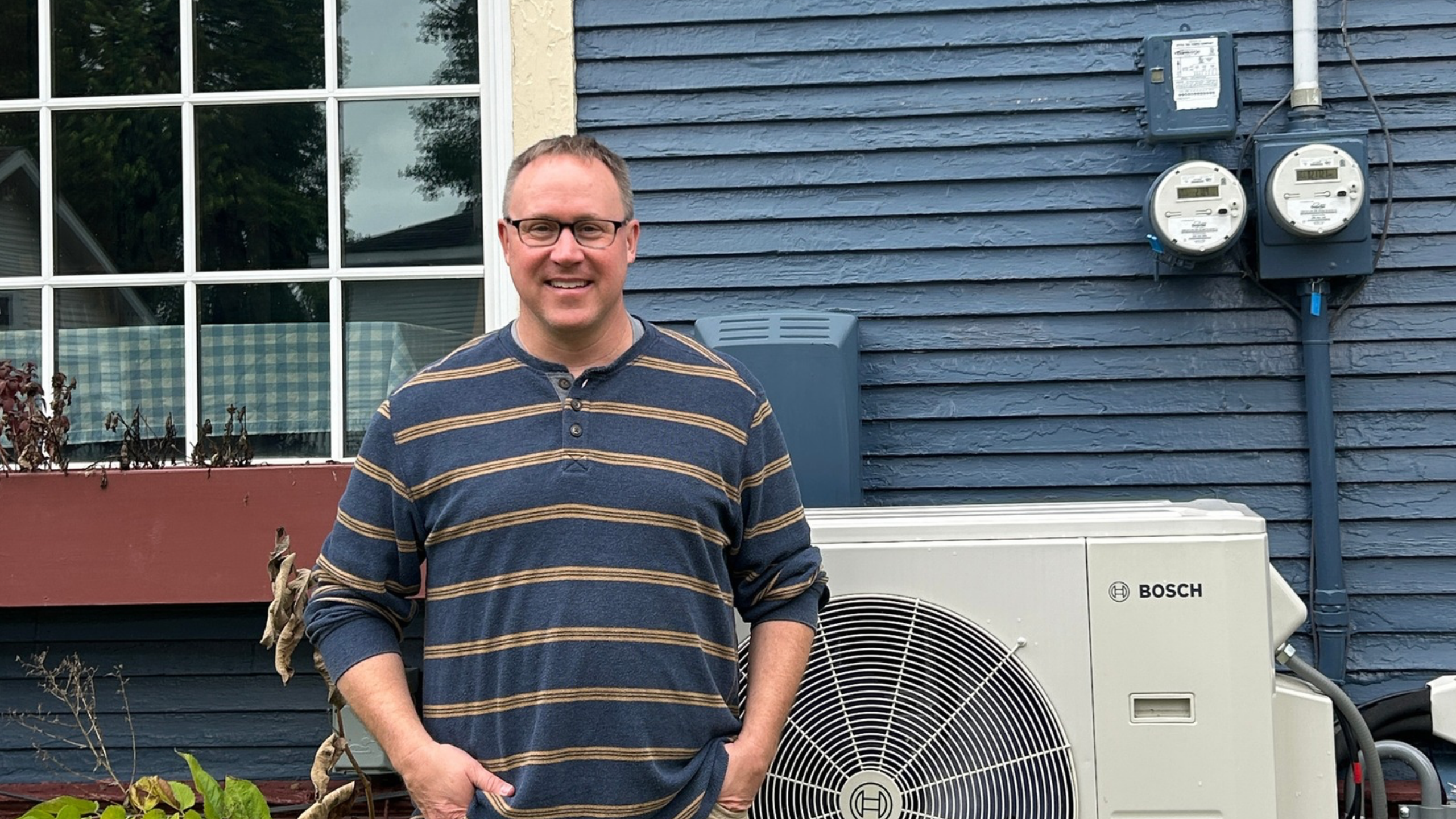
Troy Goodnough Puts Cold-Climate Heat Pump Technology to the Test in Morris

Reading Time:
For most homeowners, heating and cooling is about staying comfortable. For Troy Goodnough of Morris, Minnesota, it’s also an opportunity to experiment. His latest project involves a cold-climate air-source heat pump, a system that can cool his home in the summer and provide heat during Minnesota’s cold winters.
Heat pumps work by transferring heat rather than generating it. In the summer, they move heat from inside the home to the outdoors. In the winter, the process reverses, drawing heat from outside air to warm the home.
Cold-climate air-source heat pumps (CCASHPs) can operate even when temperatures fall below zero. Although it might seem surprising, even extremely cold air contains thermal energy. By using refrigerant that’s colder than the outdoor air, these systems can capture that energy and bring warmth inside.
Finding the Right Heat Pump for an Older Home
Troy has lived in his early-1900s home for more than 20 years. “This house was built by a Minnesota Supreme Court Justice. We still have access to the original drawings and plans,” said Troy. The home uses a high-efficiency natural gas boiler for heating, while two window air conditioners have provided cooling.
As Director of Sustainability at University of Minnesota Morris, Troy works on energy, waste, net-zero electricity, and reducing campus heating emissions. “I’m an energy nerd, so when I wanted to install my own heat pump, I thought it was going to be easy,” said Troy.
In early 2024, new federal incentives made heat pumps more affordable, but finding the right system took some research. Troy gathered several quotes and found that recommendations varied by manufacturer, system size, and price, sometimes by several thousand dollars. He also learned the importance of comparing refrigerants and equipment performance in cold temperatures.
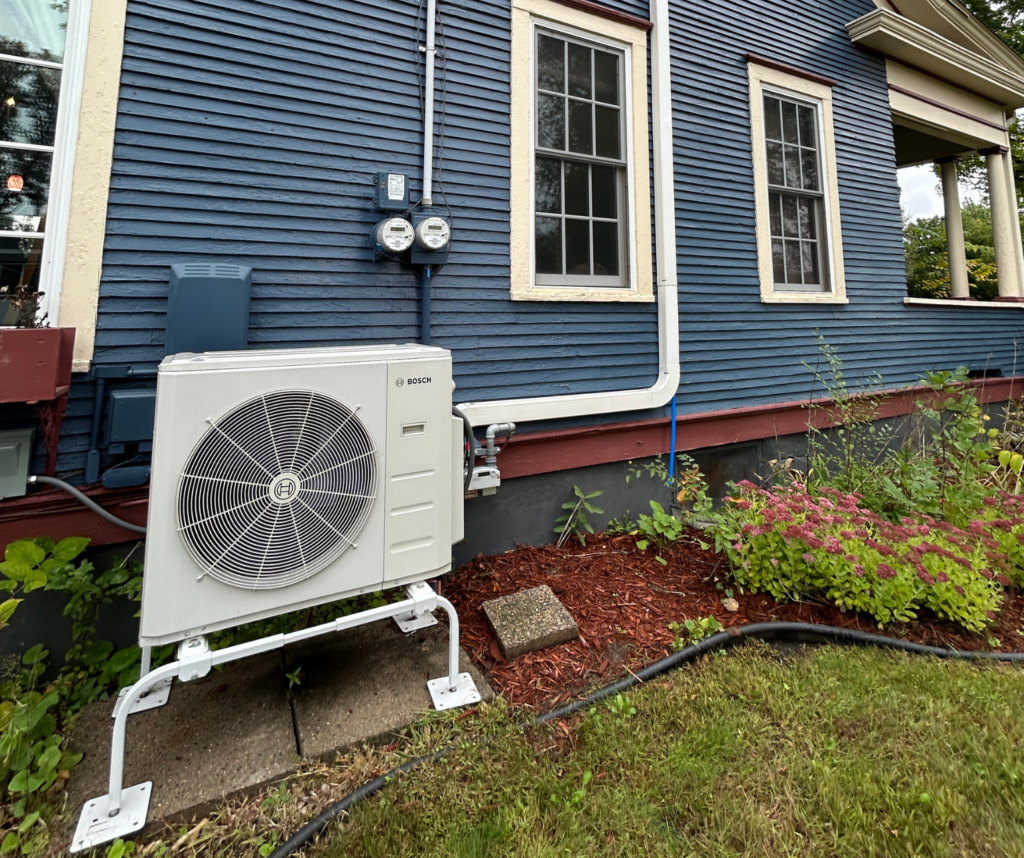
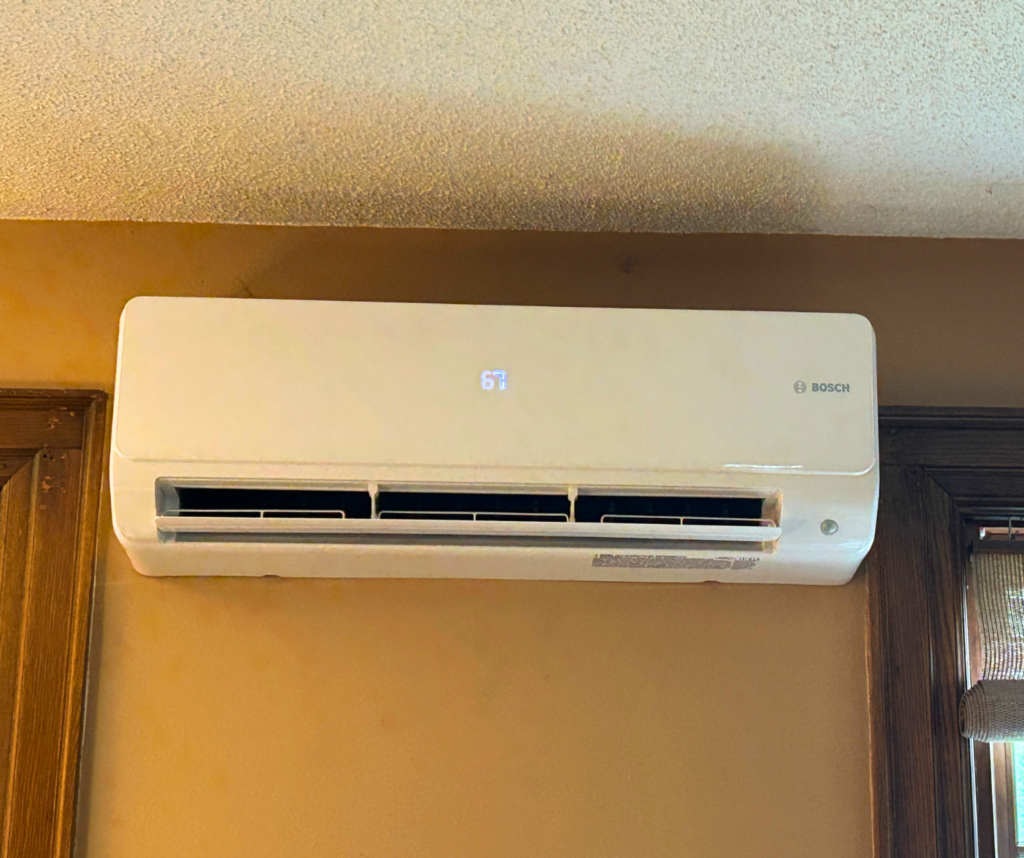
Troy eventually installed a Bosch BMS500 heat pump with one wall-mounted unit on each floor, connected to a single outdoor unit. The system now meets all his home’s cooling needs and provides supplemental heat alongside the natural gas boiler.
He’s still experimenting to find the best temperature for switching between the two heating systems. Sometimes that means cooler evenings for his family during spring and fall, but Troy enjoys the process.
“It’s like my own little lab. I can test different hypotheses, and my family and I get to experience the results in real time,” said Troy.
Turning His Home into an Energy Experiment
Troy turned to the Northeast Energy Efficiency Partnership database, which provides performance information on cold-climate heat pumps available in the United States. It includes heating and cooling capacities, refrigerant details, and coefficient of performance (COP), a measure of efficiency that varies with outdoor temperature.
A high-efficiency natural gas furnace has a COP of about 0.96, producing 0.96 kW of thermal output for each 1 kW of energy input. Most CCASHPs exceed a COP of 2, and some reach 4 or 5.
Troy is using the data to identify when to switch from the heat pump to the boiler or whether the boiler could maintain a 65-degree base temperature while the heat pump raises the home to 72 degrees.
He’s also interested in how heat pumps could work with utility programs that manage electricity demand. While his system isn’t currently controlled by his utility, he’s explored the challenges of making these programs work with ductless mini-split systems, including how cycling equipment on and off could affect performance and reliability.
Breaking Down the Costs and Savings
Troy’s decision to install a heat pump came partly from the need to replace one of his window air conditioners, which would have cost about $1,000. Instead, he invested in a heat pump system with a final installation cost of approximately $9,000. He also needed about $600 for additional electrical work.
To help offset the cost, Troy was eligible for a $2,000 federal tax credit and rebates from Otter Tail Power Company for installing a qualifying cold-climate heat pump and working with a qualified installer.
After accounting for available incentives and the cost of replacing his window unit, Troy estimates his additional investment at around $4,000.
For Troy, the upgrade has improved his home’s cooling and given him an opportunity to explore how heat pump technology performs through Minnesota’s changing seasons.
Thinking about upgrading your own heating and cooling system? Explore the Minnesota Air Source Heat Pump Collaborative’s Savings Tool to estimate potential savings, find contractors, and learn about available rebates and incentives.
About Griffin Peck