Local Organizations are Bringing Bike Share Programs to West Central Minnesota

Reading Time:
Getting on a bike is one of the best ways to experience west central Minnesota. Whether you’re cruising through town, exploring local trails, or heading to a nearby state park, biking offers a fun and healthy way to see your community from a new perspective. But what if you don’t own a bike—or don’t have room to store one? That’s where community bike share programs come in. Cities, libraries, and parks across the region are making bikes available for public use, helping more people enjoy the benefits of biking while expanding access to transportation and recreation.
A Great Way to See Our State Parks
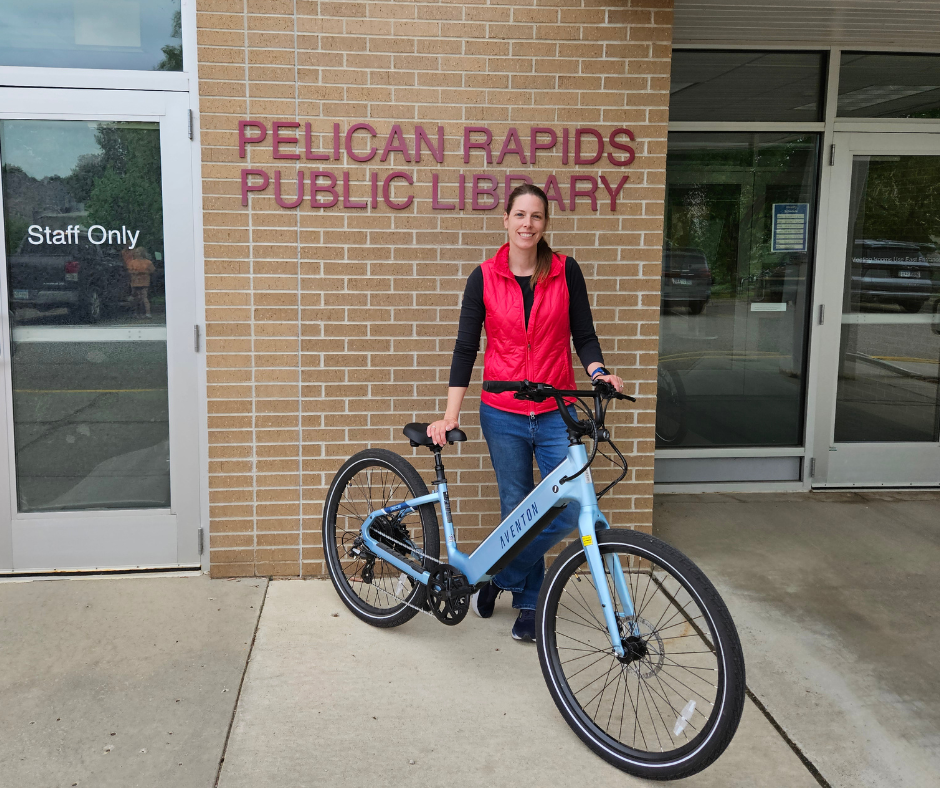
Using a West Central Initiative grant, along with $1,000 from the city’s Economic Development Authority, the city of Pelican Rapids purchased electric bikes, storage lockers, and credit card readers, making e-bike rentals available through the Pelican Rapids Public Library for residents and visitors. The library rolled out the bikes earlier this year, and they are now available for checkout.
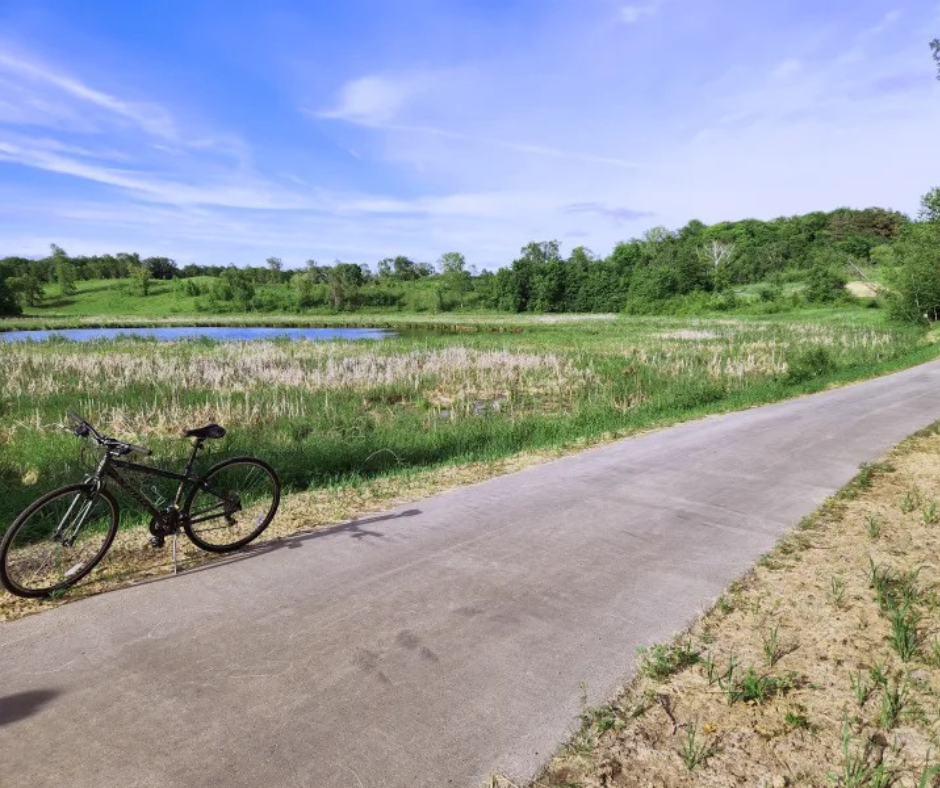
Pelican Rapids is well positioned for bike rentals because of its connection to Maplewood State Park through the Heart of the Lakes Trail. Riders can rent an e-bike from the library and travel all the way to the state park by trail.
“We hope this will create an opportunity to explore the community via the bike trail,” said Pelican Rapids Public Library Director Marie Schwirian. “People may not have a bike, so this gives them that ability to visit the park and be out in nature.”
A mix of Pelican Rapids residents and riders from out of town have enjoyed the e-bikes.
The bikes can be rented by the hour or for the whole day: $10 for one hour, $24 for four hours, and $35 for 24 hours. Subsidized rates are also available for people receiving government assistance.
Glendalough State Park also offers another way to explore the region by bike. Galloping Goose Rentals provides rental bikes in Battle Lake and inside the park. Groups can also rent a quadricycle for a fun way to ride the trail that loops around the park.
Considerations for Bike Share Programs
Communities across west central Minnesota are finding ways to make bike share programs work locally.
After Ofo, an international bike-sharing company, shut down, a bike shop in Crosslake had a surplus of Ofo bikes that needed a new home. Jake Krohn, Pedal Fergus Falls website manager, helped distribute these bikes to organizations throughout Otter Tail County, including hospitals and the Fergus Falls Public Library. Over time, some organizations found that different groups could make better use of the bikes. For example, the Fergus Falls Public Library donated its bikes to the local Fire Department.
While the bikes were underused in Fergus Falls, Jake Krohn noted that they had the potential to fit well into the community. “They are super low maintenance and ride well around town,” Krohn said. “I still have one. I keep it outside and it is still in good shape.”
Experiences like these highlight the importance of tailoring bike share programs to local needs and adjusting them over time. As communities continue experimenting with different approaches, they are learning what helps residents get the most value from shared bikes.
Region-Wide Bike Rentals
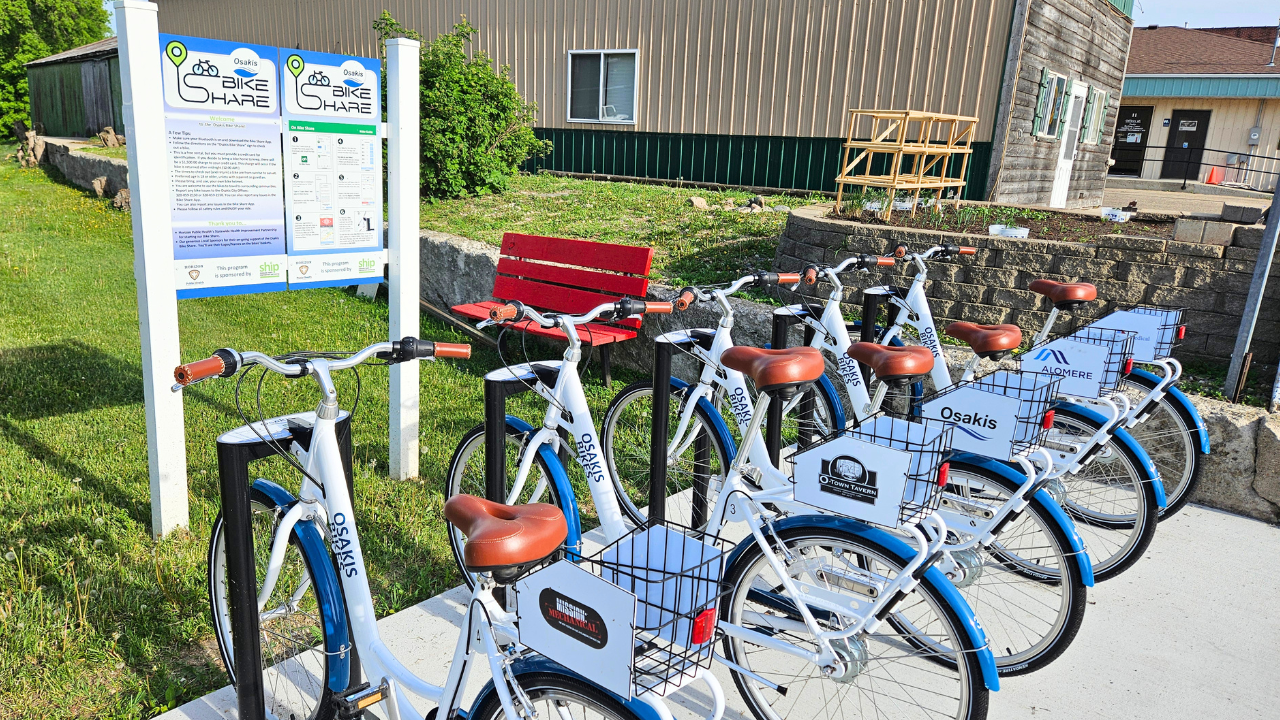
Horizon Public Health, an Alexandria-based public health organization, has helped bring bike sharing programs to communities across the region. Using grant funding, Horizon Public Health launched bike share programs in Starbuck in 2023, Elbow Lake in 2024, and Osakis and Wheaton in September 2025.
Dynamic Bikes, a company that provides branded bike fleets across the United States, supplied the bikes and provided bike maintenance training for city staff in Osakis and Wheaton.
Families, couples, and other riders use the bikes regularly. Offering the bikes at no cost helps reduce financial barriers, while cities can offset maintenance costs through company-sponsored advertisements placed on the bikes.
Expanding Bike Programs
Bike share programs in the region are still relatively new, with most launching within the last five years. Yet communities continue to explore new ways to make biking more accessible, affordable, and enjoyable for residents and visitors alike. Horizon Public Health plans to expand bike sharing programs to Glenwood and Morris in the coming years, bringing even more opportunities for people to experience their communities on two wheels.
As interest in biking grows, so does interest in the trails, infrastructure, and community investments that support active transportation. Communities are also learning what makes bike share programs successful: placing bikes where people can easily access them, reducing financial barriers, offering options like e-bikes, and helping riders feel safe and confident on the road.
Whether you’re looking for a new way to get around town, explore a state park, or enjoy a summer afternoon outdoors, these programs are making it easier than ever to hop on a bike and ride.
Visit our Transportation Planning web page to learn more about active transportation opportunities across the region.
About Jack Butler