Let’s Go Solar: Supporting Solar Development in West Central Minnesota with SolSmart

Reading Time:
Thanks to new federal tax credits, using solar panels to power our homes, businesses, and other buildings has become more attractive than ever. These tax credits are available to communities looking to install solar to reduce energy costs and be more sustainable, and rebate and grant programs can further reduce the cost.
Want to know if your home is suited for solar?
There’s a tool for that! We used the Minnesota Solar Suitability Map to determine if the West Central Initiative office in Fergus Falls is a good site for solar based on tree cover and other factors that the tool analyzes. It was easy to discover the payback period and estimated size of a solar system on the building or nearby greenspace. It turns out that our office and much of west central Minnesota is ideal for solar installations. The Minnesota Solar Suitability Map tool, along with many other resources for those interested in solar, is now on our new Getting Started with Solar page as a part of our participation in the SolSmart program.
What is the SolSmart program?
SolSmart is a national, no-cost technical assistance program that helps regions and communities capture the benefits of going solar by providing training and resources that accelerate the transition to solar energy. We’re hosting two trainings through the SolSmart program that are designed to help communities get ready for an increase in solar development:
- Solar PV Planning and Zoning Best Practices, Tuesday, October 9, from 2 – 3:30 p.m.
- This training will cover best practices in planning and zoning for solar photovoltaic (PV) installations and development.
- Solar PV Permitting and Inspection Best Practices, Wednesday, October 23, from noon – 2 p.m.
- This training will cover how the permitting and inspection process is one of the most important tools local governments can use to encourage more rooftop solar installations.
City employees from the region are encouraged to register to attend both sessions to gain knowledge and prepare for solar projects in their communities.
More local solar opportunities
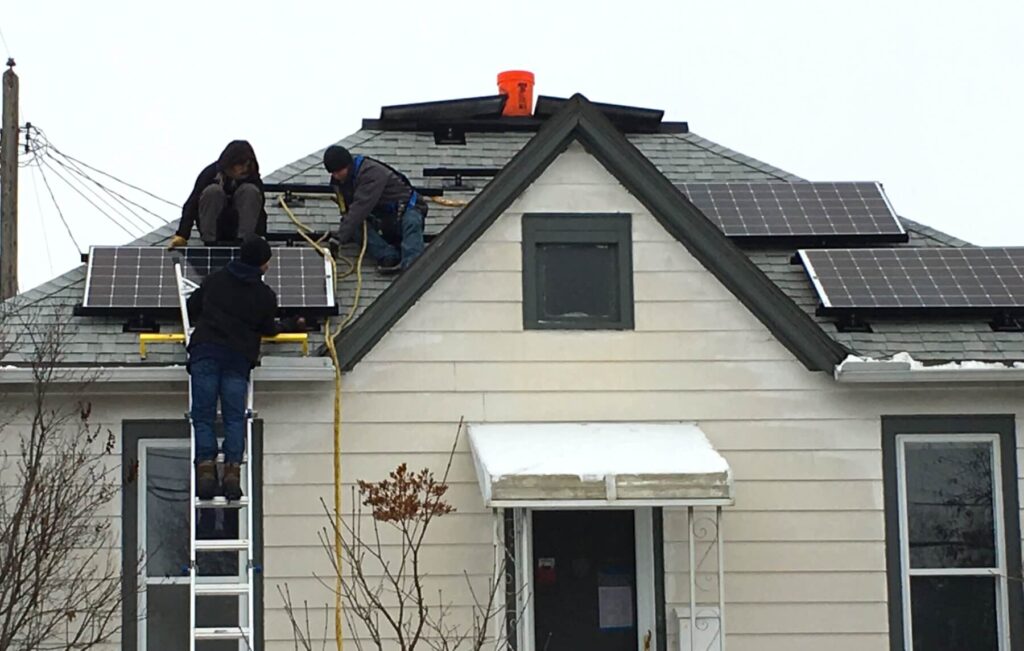
While there may not seem to be many solar installations in your community yet, we’re actively working to support solar development in the region. Eleven communities have joined our Municipal Solar Cohort program, which helps smaller communities realize the benefits of solar projects and capture financial incentives. This program leads community leaders and staff through the process of completing energy audits to improve energy efficiency and cost savings, navigating financial incentives through local and federal programs, and securing a solar developer to complete project installations.
We’re also partnering with Solar United Neighbors to launch a cooperative purchasing program that will help residents, small businesses, and nonprofits go solar. Solar United Neighbors is a nonprofit that organizes solar purchasing co-ops in multiple states across the country, including Minnesota and works with members of a co-op to select a reputable installer to complete the projects. Residents and other interested organizations should look for more information about this opportunity in the coming months, with anticipated project installations occurring in the summer of 2025.
“At the West Central Research and Outreach Center (WCROC) in Morris, we are finding solar energy to be compatible with farming activities like grazing cows,” said Eric Buchanan, Director of Renewable Energy at WCROC. “This is called agrivoltaics and it allows farmers to harvest sunlight twice! Solar energy is also a great way to produce your own electricity, reducing your carbon footprint and saving money in the long run. I put solar panels on my house through a Solar United Neighbors buying co-op and was very impressed with the whole process and am very happy with the results. I now produce about 75% of my own electricity and the panels will pay for themselves in less than half their guaranteed lifetime!”
With these upcoming opportunities and anticipated growth in solar development across the state and nation as a result of increased financial incentives for clean energy projects, communities will need to be knowledgeable about solar to navigate projects efficiently.
For more information and a list of resources for going solar, visit our Getting Started with Solar page.
About Cedar Walters