
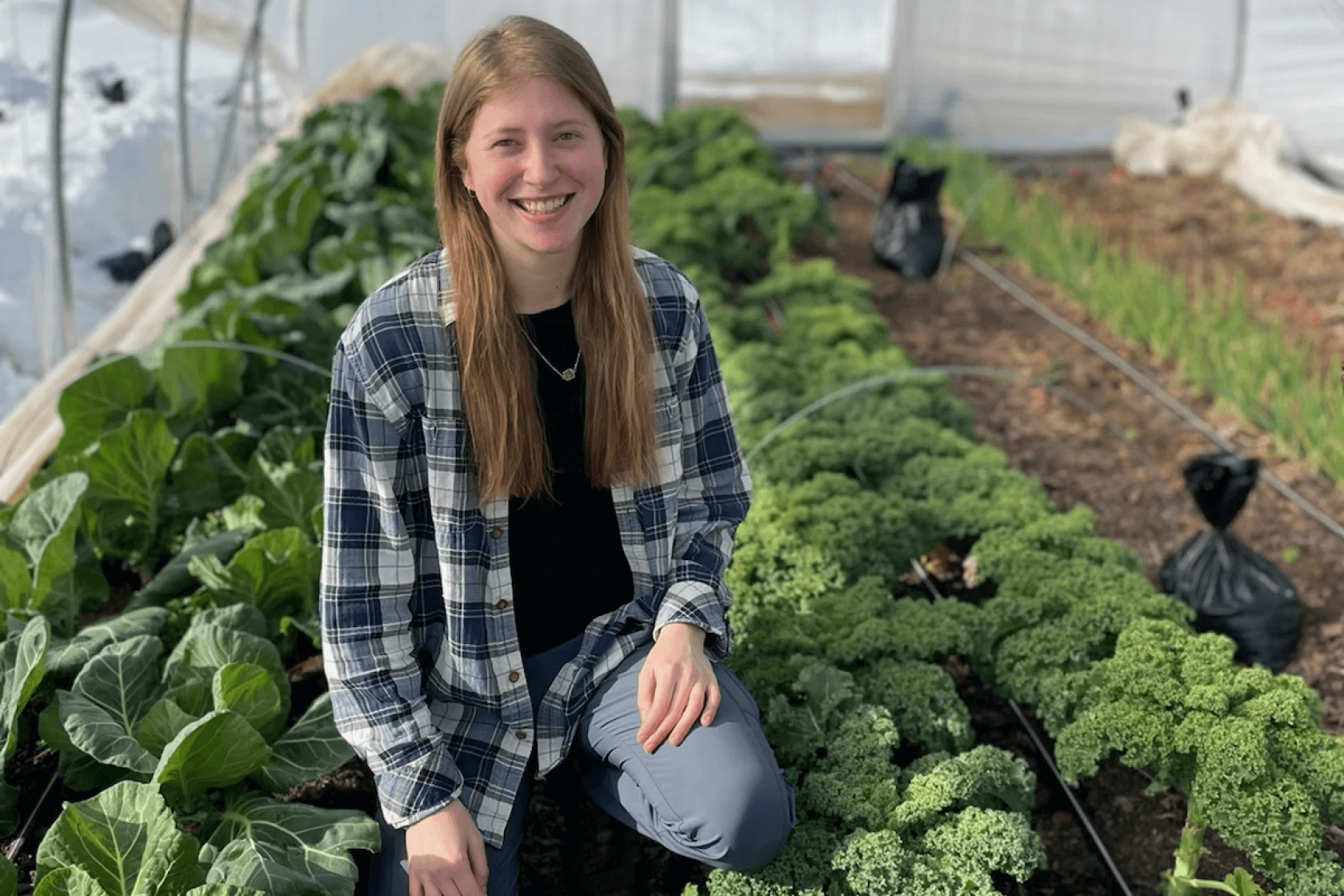
An Interview with Olivia Olson about Sustainable Gardening

Reading Time:
Spring has arrived in full swing, and many have started to look towards the soil. Gardening provides us with a chance to get outdoors, giving us a space for recharging and reflecting. Part of climate action requires us to look inside our everyday lives and hobbies, asking, “How can I be living in a more sustainable way?”
Gardening is a hobby that allows us to take such an action. In a recent chat, University of Minnesota Extension Educator Olivia Olson provides advice on how to garden in an eco-friendly way, potentially turning your garden into a form of climate action.
What is your current position?
I work with the University of Minnesota Extension for Otter Tail County as the county-based extension educator with an agriculture and horticulture focus. Working in partnership with the East Otter Tail and Wadena Soil and Water Conservation Districts, I support their education, outreach, and the work that they do with landowners and farmers to care for soil and water in the area. I also work with the master gardeners in Otter Tail County, helping them with their projects and events.
How has gardening changed in the past 10 years?
The pandemic was an impetus for more people getting into gardening as they had more time on their hands.
People are also more conscious of water and the types of plants they grow. There’s more focus on growing natives in our area—they’re better adapted to the climate, especially as our climate keeps changing. Because we’ve found ourselves in a drought over the last several years, people are asking, “Okay, how can I use water wisely? And what can I grow that might be more drought tolerant or be better adapted to our seasonality here?”
What advice do you have for someone who wants to start gardening in a more climate-friendly way?
- Keep roots in the ground. Soil cover is beneficial for both climate and soil health.
- Rotate your plants yearly to introduce different nutrients into the soil and help mitigate diseases. If you use the same area of soil for growing vegetables every year, it’s important to rotate them. You don’t want to grow your tomatoes in the same place year after year because they use the same exact nutrients. If there’s any diseases, those will then remain in the soil, infecting your plants.
- Use mulch to keep weed pressure down.
- Compost food scraps, bringing nutrients back into the soil while reducing food waste
- Limit your use of chemical herbicides and insecticides. If you see a pest, remove them by hand or use of a homemade, eco-friendly spray.
Why should someone who is passionate about gardening also be interested in climate action?
Most ways we interact with the natural world have a connection to climate. With gardening, there’s continual interaction with the soil and plants grown with the way the area of land is taken care of. For example, it might be dug up, different things in the soil might need some tilling, different nutrients cycle in and out because of plant matter that’s been decomposed. All of this is a microscale of what happens at a larger capacity around the world. It might seem like a small thing—“I have my little 10 by 10 garden. I’m not doing anything to impact the climate.” But that 10 by 10 garden is still part of the land. It’s important to take care of the soil because it’s something we need to live. We need to be able to grow food in that soil for many years to come.
About Brogan Ludwig