Reflecting on Ramadan
Reading Time:
Ramadan is the holy month of fasting, prayer, and community for Muslims.
This year, Ramadan and Lent coincided. So, we took the opportunity to learn more about the Muslim faith and Ramadan through the experiences and words of our Muslim neighbors.
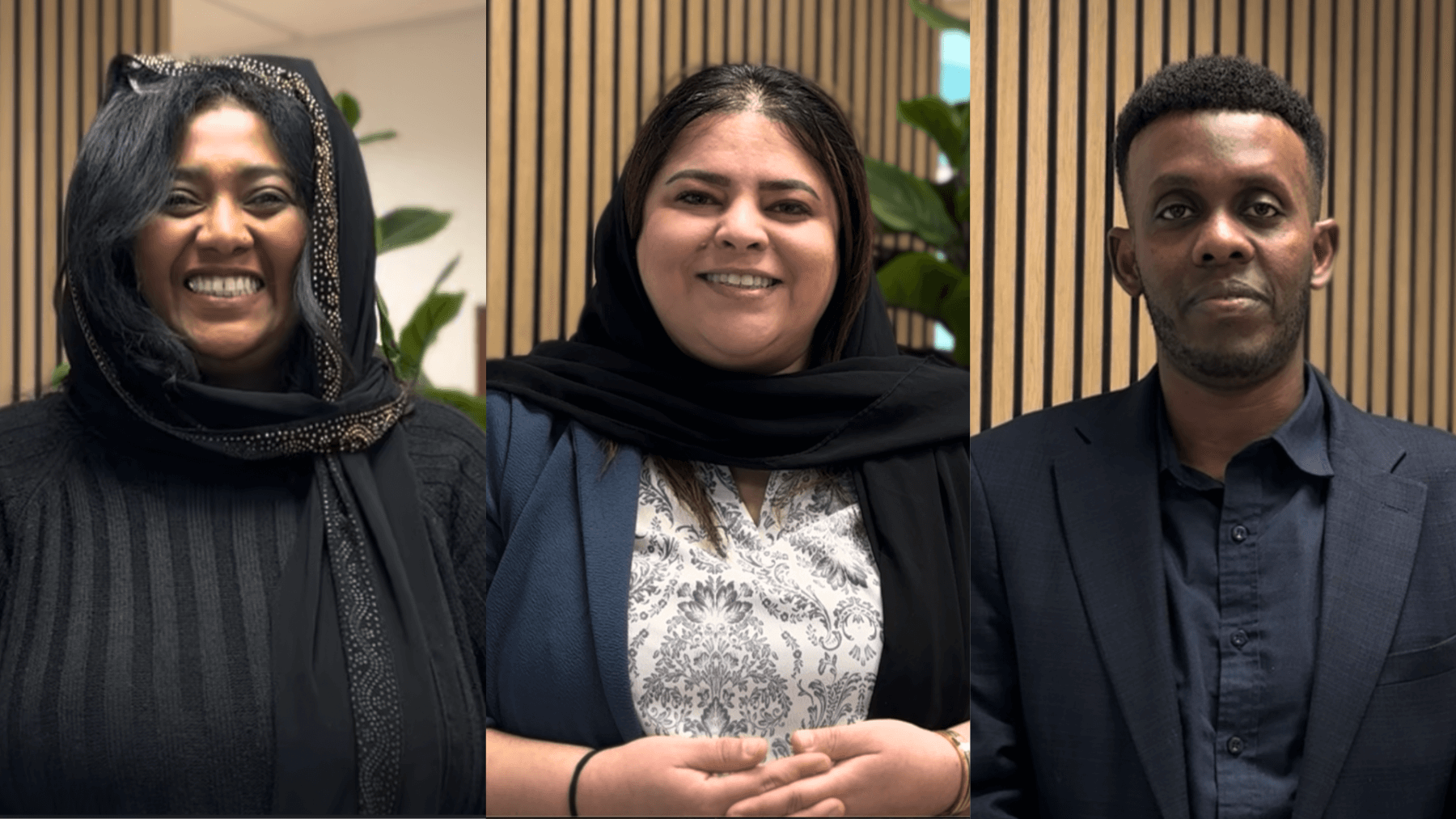
In Moorhead, three community organizers welcomed our inquiries about Ramadan: Fowzia Adde, Executive Director of the Immigrant Development Center; Siham Amedy, Project Lead for Creating Community Consulting; and Cani Adan, Founder and Executive Director of New Roots Midwest.
They sat down with us to share what Ramadan means in their individual cultures and families. We had many smiles as we discussed fasting, food, and how charity and love are part and parcel of observing Ramadan.
What is Ramadan?

Fowzia: Ramadan is the time of self-reflection, spirituality, and pausing. You know, we just pause, I mean, and you realize that life requires you to self-reflect. So, it’s really a big time for spirituality, too. We have five pillars of Islam. One pillar is to pray every day. The second pillar is to give, to be generous. The third is to fast through Ramadan. The fourth pillar is to visit the Holy Land, and the fifth pillar is to believe in Muhammad. Ramadan is part of you, if you are a Muslim. It’s a must.
Siham: That’s exactly it. It’s one part of the five pillars. I just want to clarify; one of the pillars is to believe in one God, and Muhammad is a messenger. Ramadan is fasting for anyone who’s able, and it’s reading the Quran because it’s the month the Holy Quran was revealed to the Prophet Muhammad.
Cani: Ramadan is so special to me, to the people that I represent and the culture that I come from. I have been fasting (for Ramadan) since I was eight. But as I grow up, I find out it’s not only fasting, it’s a lot of discipline for what we do, it’s a lot of believing and being faithful. It’s so cool, right? So, to me, Ramadan is so special. It is a time where I feel like I discipline myself.
Tell us about fasting

Fowzia: Fasting is for anyone who’s able to. However, if people cannot fast, they’re not required to. For instance, you don’t have to fast when you are sick, you don’t have to fast when you’re breastfeeding. There are other special circumstances as well. So, fasting is a big part of it, but there are also so many other acts, like giving to charity, working on your relationship, and working on forgiveness as well.
Siham: People are generally curious about fasting. Some people want to participate with you and some people don’t want to offend you by asking questions about our fasting. I get a lot of “What? Not even water?” reactions. And I say, yes, when we are fasting we do not eat or drink from sun up to sundown. I’m very open and say I’m not offended by any questions. We have such a large community now, and we came to the area, to Minnesota, where there was an established community. We lived in neighborhoods that had individuals practicing Ramadan and participating in it. It felt like we had support in the community.
Cani: Fasting is important because in our body, we have been eating for 11 months. And fasting is a good way to clean up your body. I know it’s not easy for us to go on a diet. So, to me, the knowledge that I get from fasting during the day is that I am healthier.
What should we know about Ramadan?

Fowzia: There are many traditions. I remember the traditions from my childhood, like the Imam prayer in the morning, a prayer that seemed like a song. but it’s not a song, I miss that. We used to have drummers who sang, “Wake up, wake up! It’s the time to eat!” in our native language, and so that’s a good memory for me, too.
Siham: Ramadan follows the lunar year. It’s a nine-month lunar year, a different cycle than the 12-month Gregorian calendar. Not all Muslims practice the same way. We have different sects of Islam and your culture influences how you practice Islam. But we can all agree that it’s a month that has huge significance, and that we need to be we need to participate in a way that makes sense to each person.
Cani: It’s a time when we visit people, one another, especially relatives. It is a time where we must connect to one another. It doesn’t matter even if you are mad at me or I am mad at you, even if you don’t have a good relationship with your loved ones. It’s a time that you must go to them, even though something might be their fault. You must go and say hi to them, share food with them, and remove those barriers. And be forgiving. Also, come back to your family. It’s a time for the family. Spend time with them. That is what we do.
In a region shaped by many cultures and experiences, conversations like these help us build understanding and deepen our sense of belonging. We thank Fowzia, Siham, and Cani for helping us see Ramadan through their eyes—and for reminding us how faith, tradition, and love of community unite us.
About Rick Schara