
Saving Rainwater — One Barrel at a Time

Reading Time:
Did you know that just one-tenth of an inch of rain on a 1,000 square foot roof can fill a 55-gallon rain barrel? If you’re looking for a way to conserve water and live more sustainably, rain barrels are an easy and impactful place to start. We recently connected with two residents already using rain barrels, and their experiences showed just how simple and rewarding this practice can be.
Why Water Conservation Matters
Saving rainwater is a smart conservation strategy—and it’s only becoming more important. In Minnesota, we’re seeing wetter springs and drier summers, which stress both stormwater systems and water supplies. Rain often comes in short, intense bursts, leading to runoff rather than absorption. For homeowners, rain barrels help reduce runoff and reliance on municipal or groundwater sources for tasks like watering gardens.
Creative Rainwater Solutions
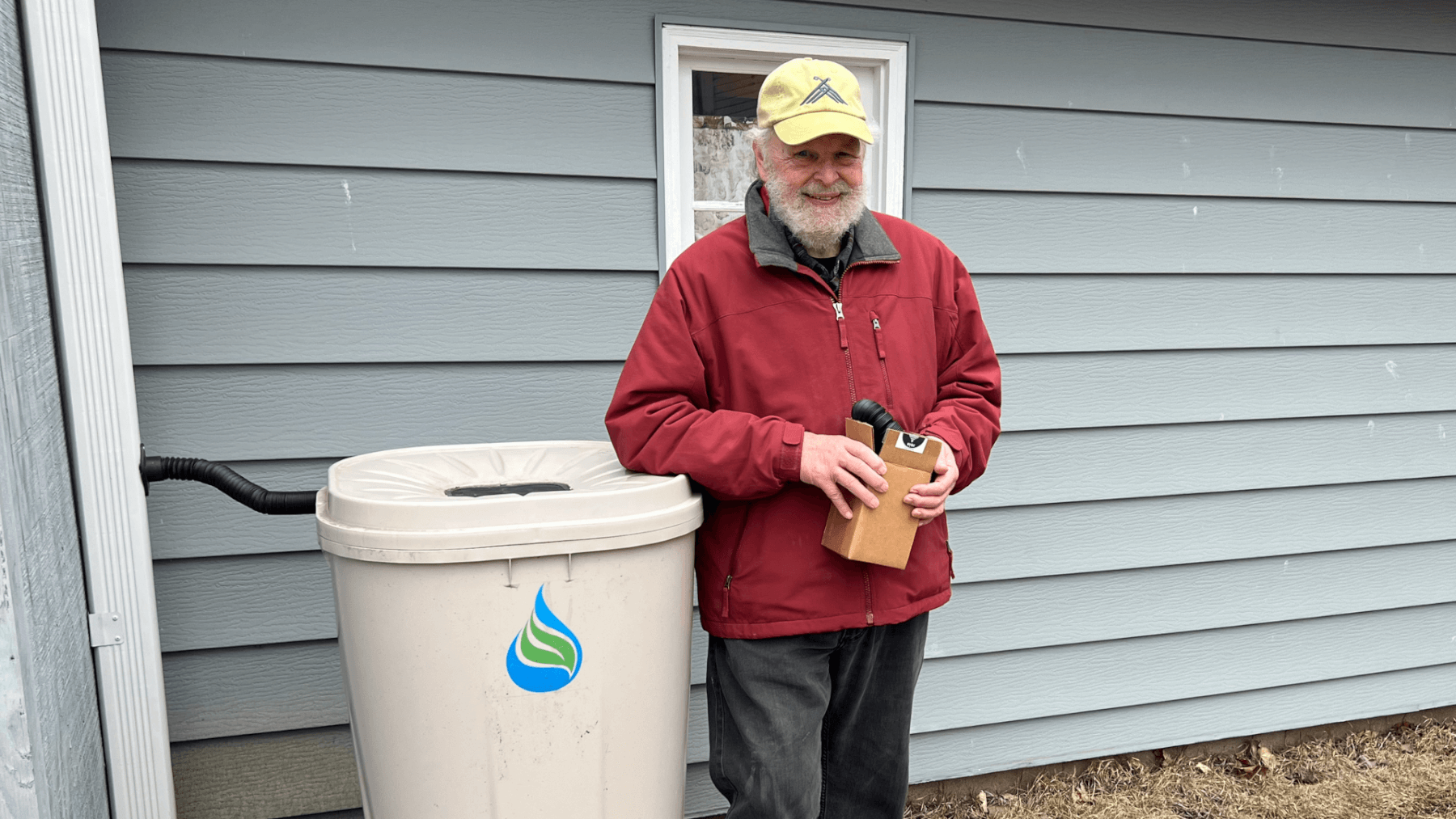
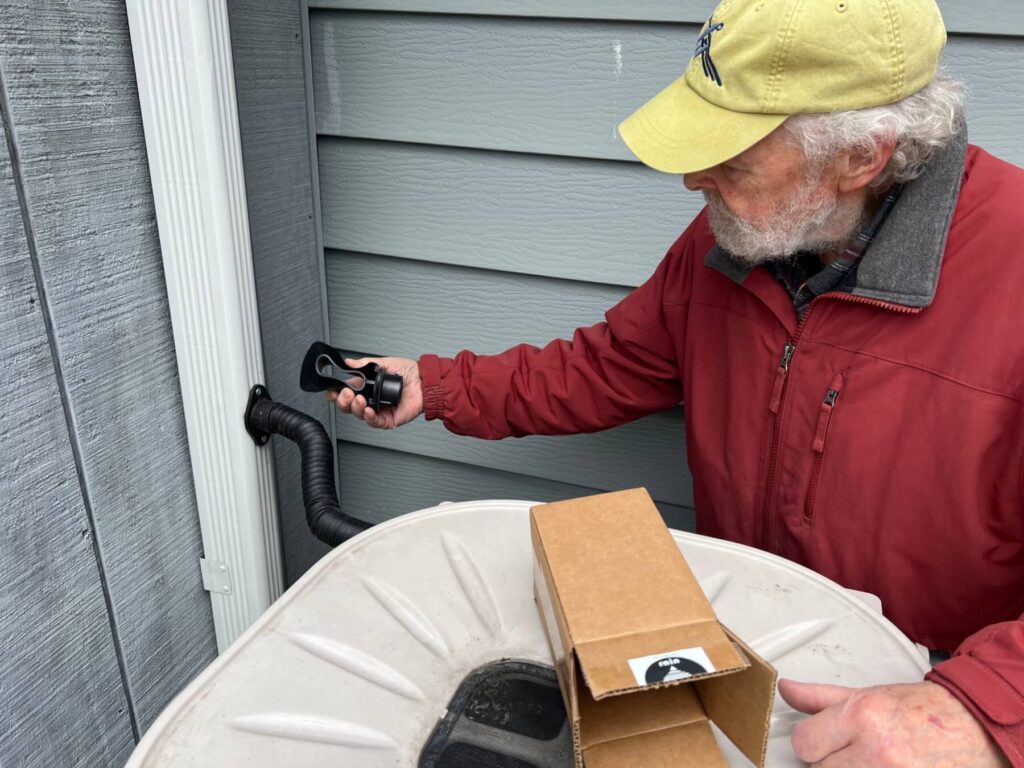
Dick and Jen Enstad of Fergus Falls have used a rain barrel for years. They love not having to haul a hose as far to water their garden. Their barrel fills quickly from just one side of their shed. “We were doing a lot of gardening and just decided to set up a rain barrel,” Dick shared. As a skilled woodworker, he recommends using a diverter kit—like the one he got from Rain Brothers—and a special hole saw to connect it to the downspout without cutting it off completely.
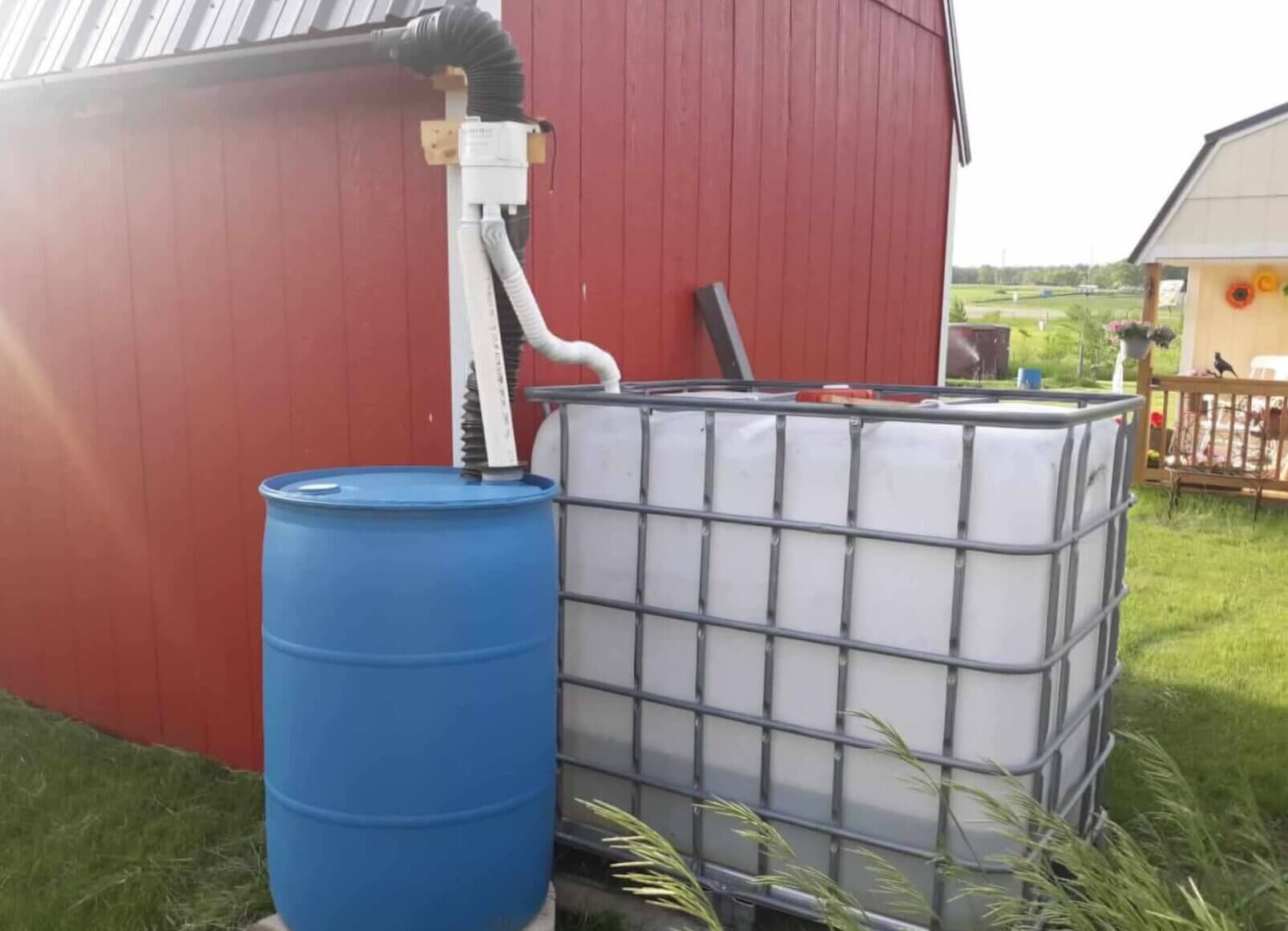
John Opheim and Jenny Field of Maine Township take things further with a larger system for their flower and vegetable gardens. “We saw water just running off the roof and thought, ‘Why not use it?’” John said. They use a 275-gallon food-grade tote with a diverter, plus two 55-gallon barrels. “A couple of inches of rain fills the tote fast—and that’s from just 25 feet of gutter.”
John hopes to add another large tote. “In a decent year it’s enough, but the past few summers have been so dry—it’s not,” he noted.
Ready to Get Started?
There are plenty of ways to jump in. Stores like Fleet Farm and Home Depot offer rain barrels under $100, or you can go the do-it-yourself route like John. Sites like Rain Barrel Depot sell kits with diverters and connectors, and Facebook Marketplace is a good place to find affordable food-grade drums or totes.
Some tips from John and Dick:
- Keep containers out of direct sun to prevent algae.
- Make sure barrels sit on a stable, raised surface for gravity-fed flow.
- Always drain and store barrels before freezing temps—two cracked spigots taught us that lesson!
- From repurposed trash cans to custom setups, there are endless creative ways to collect rainwater.
With extreme weather on the rise, it’s more important than ever to protect and preserve our water resources. Rain barrels are a simple, low-cost solution you can implement at home. If you get started now, you’ll be ready for the spring rains!
Join the Sustainable Communities Network
Last month, we hosted a Sustainable Communities Network meeting with River Keepers, a Fargo-Moorhead nonprofit that offers do-it-yourself rain barrel workshops. Many people were interested in using rain barrels, but just needed a little extra encouragement! Join us for upcoming Sustainable Communities Network meetings on supporting active transportation and biking, understanding the health impacts of climate change, and more.
About Cedar Walters