
Teaching Kids to Care for the Environment, One Play at a Time

Reading Time:
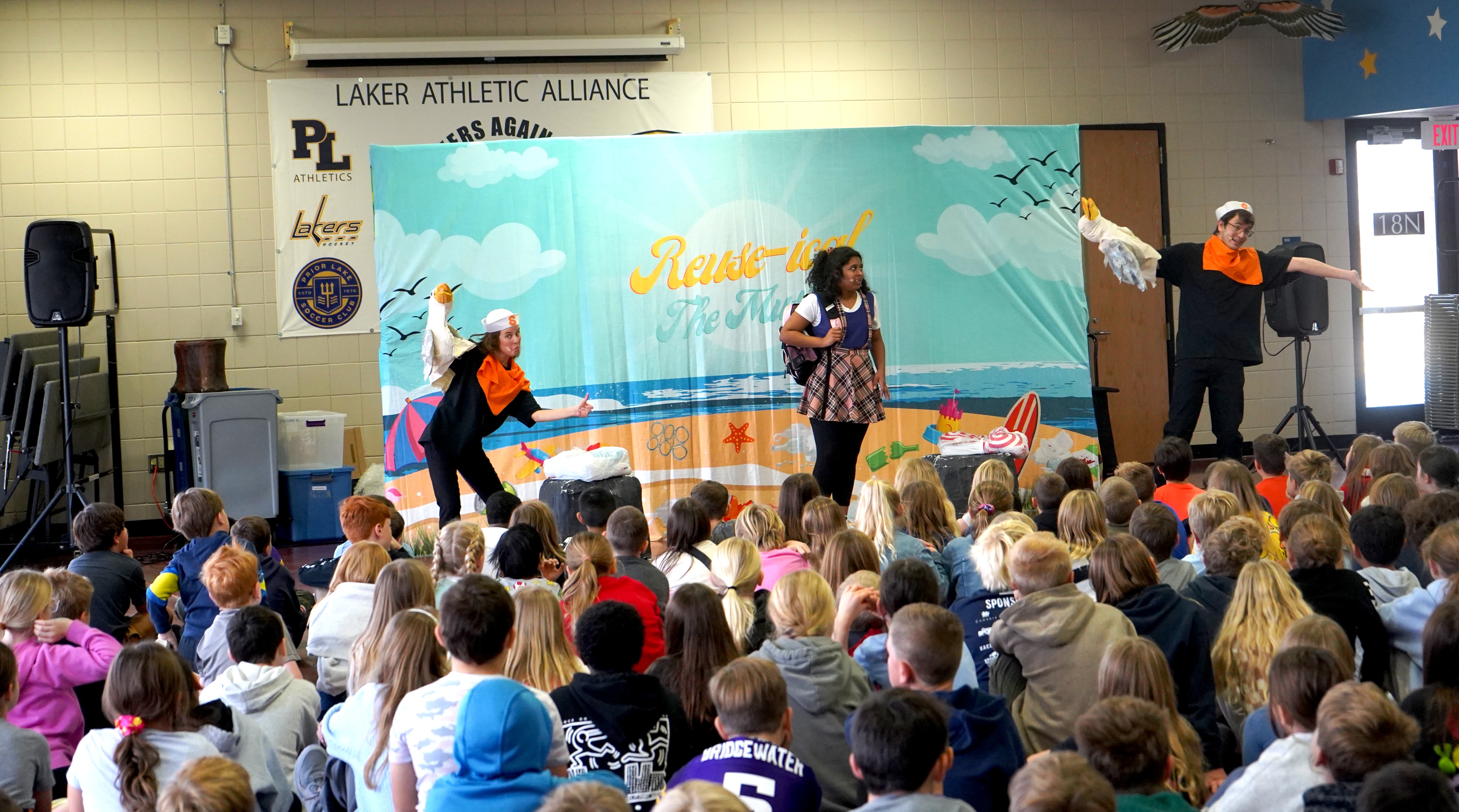
Students gather to watch a play. A character on stage struggles with what to do with an empty plastic bottle. Should it go in the recycling bin? Or the trash? Can it be reused?
For the students watching, the answer might seem obvious. But that moment offers something more than a reminder about recycling. It gives young people a chance to see a decision unfold, consider why it matters, and help a character make the right choice.
That’s the power of theater, says Sara Cronk, managing director of CLIMB Theatre, Inc., a Twin Cities-based organization that uses performance to teach life skills and encourage positive behavior.
“It’s fun, and it’s a good delivery method for a message,” Cronk said. “It lets the audience see the scenarios play out. So, they get to see a character that they can relate to, go through this decision-making process, and learn all about it.”
Thanks to a grant from West Central Initiative, students at three elementary schools in Barnesville, Fergus Falls, and Starbuck will have an opportunity to experience learning firsthand through CLIMB Theatre’s environmental responsibility programming this school year.
Learning the Why, Not Just the What
CLIMB Theatre has spent decades bringing educational messages to young audiences. Its mission centers on creating customized assemblies, classes, and workshops that build skills such as empathy, perseverance, ownership, well-being, equity, and self-regulation.
Environmental responsibility fits naturally into that approach.
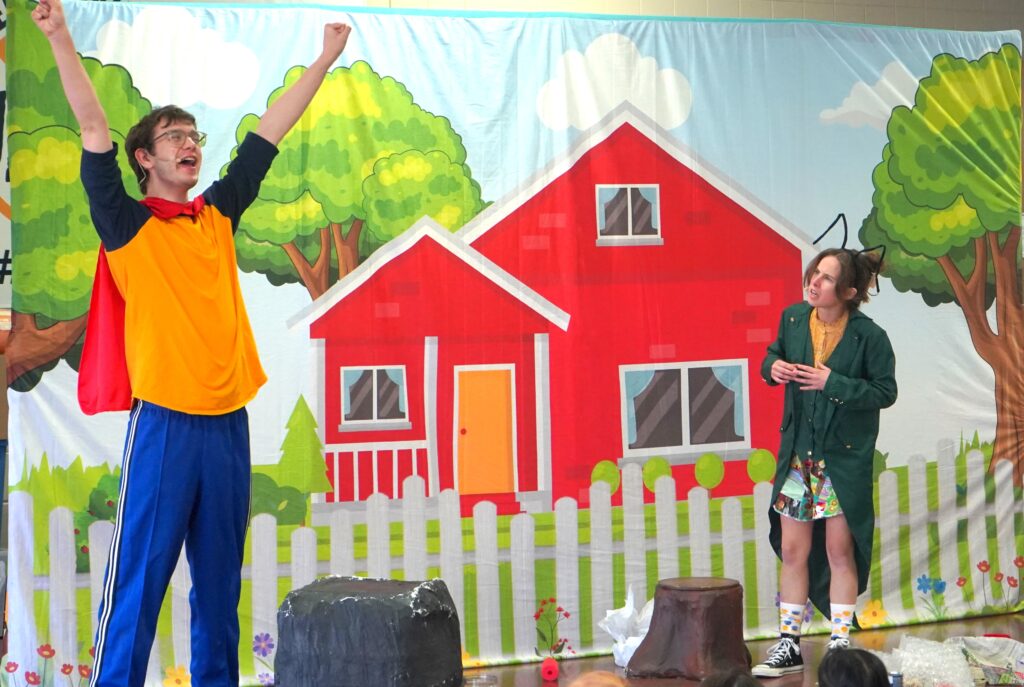
Rather than simply telling students what they should do, the theater uses characters and relatable situations to help them understand the reasons behind their choices. Students become observers, problem-solvers, and sometimes even teachers as they watch the action unfold.
Cronk says young people may already know how to recycle or understand some basic environmental practices. When a character struggles with a decision, students can explain what the character should do and why.
That participation reinforces what they know while helping them recognize that their actions matter.
“We don’t just teach what, we teach why,” Cronk says. “Why should we care about the environment? Why do we reduce, reuse, recycle?”
It’s a simple distinction, but an important one. Knowing the steps is useful. Understanding why those steps matter can help turn knowledge into habits.
And when those lessons reach children at school, they are often brought home, too.
The goal is to make environmental responsibility something students understand and practice, rather than just another subject they hear about once in a classroom.
Although CLIMB Theatre is based in the Twin Cities, its performers travel throughout Minnesota and other states in the Midwest.
For the West Central Initiative grant, CLIMB’s outreach team contacted eligible schools across the west central Minnesota region and had no trouble finding partners who were eager to bring theatre to their students.
A typical performance is tailored to different age groups from kindergarten through sixth grade. So, while the message may be the same, the performance speaks to the age group.
Partnerships Make the Difference
For a nonprofit arts organization, delivering that experience takes more than talented performers. It also requires relationships with schools, community organizations, and funders willing to invest in the work.
Cronk describes CLIMB Theatre as a resourceful organization that combines educational programming with a variety of funding sources. Grants, such as the one from West Central Initiative, are especially valuable because they connect funding with a specific community need. Schools receive programming for their students, while the organizations supporting the effort help promote environmental themes.
That kind of partnership is important to West Central Initiative’s work throughout its service area. Supporting community well-being means recognizing that positive change comes through many approaches, including education, the arts, and opportunities for young people to learn by doing.
Theater may not be the first thing people think of when they consider environmental education. But it offers something different from a lecture or a list of instructions: a story, a character, a choice, and a chance for an audience to think through the consequences.
For Cronk, that’s the heart of CLIMB Theatre’s work.
The organization wants students to leave with more than a set of directions. It wants them to understand the reasons behind the actions they take, whether those actions involve caring for the environment, treating others with respect, or learning to manage their emotions.
The lesson reaches beyond the stage. When children understand why something matters, they have a stronger foundation for making thoughtful choices in their classrooms, their homes, and their communities.
And sometimes, helping create a better world starts with something as ordinary as deciding where to put an empty plastic bottle.
About Rick Schara